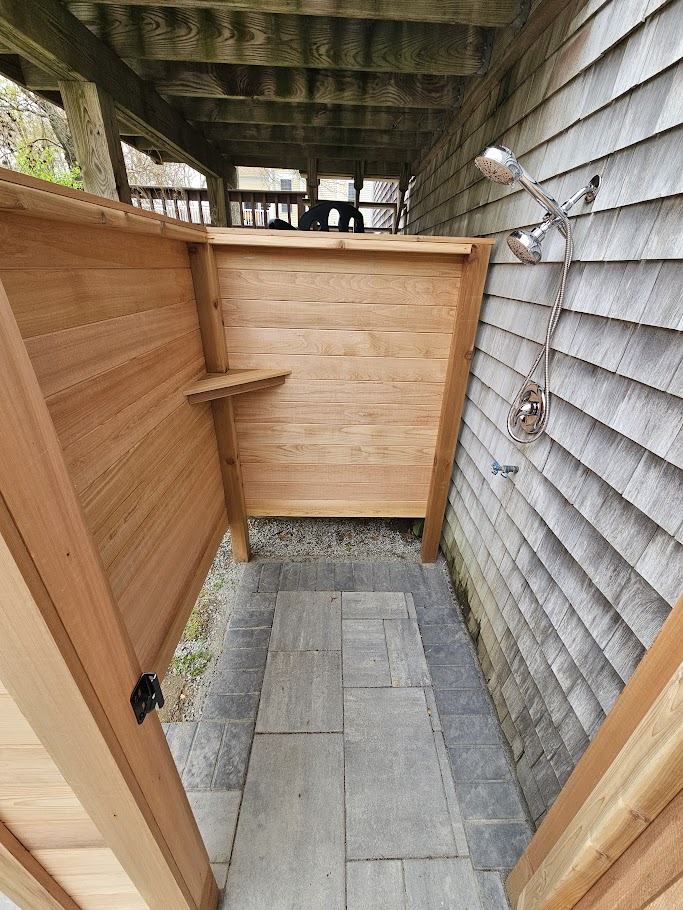
Built for a coastal home in Saunderstown, this clear cedar outdoor shower was designed with a few upgrades beyond a standard build. A louvered privacy panel replaces a solid wall on one side, allowing airflow through the enclosure so it dries out between uses instead of staying damp, which extends the life of the wood significantly.
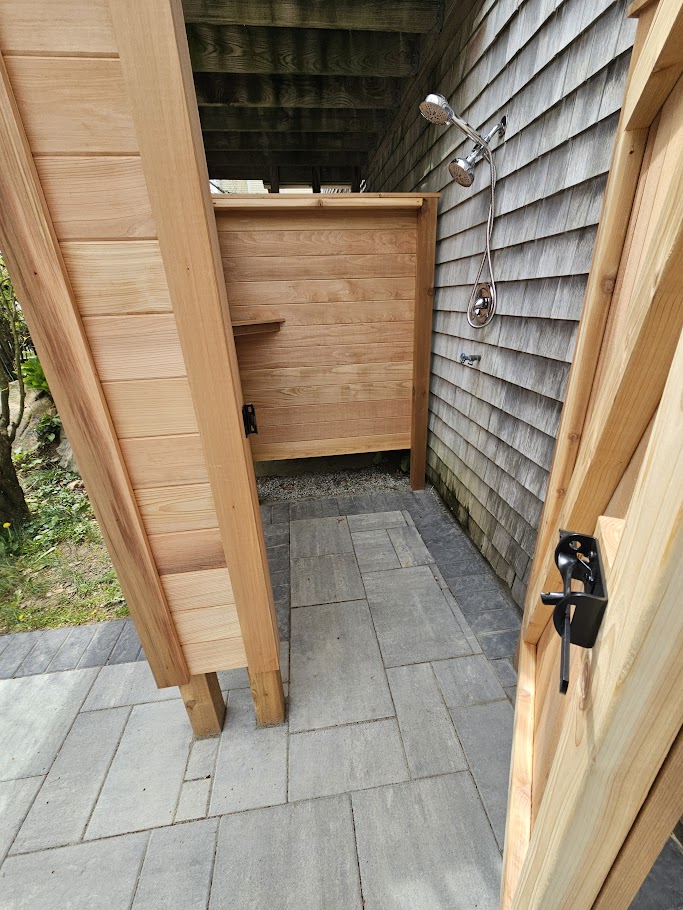
Inside, we installed a dual shower head setup and finished the floor with bluestone pavers, a natural stone that stays cooler underfoot than composite decking and drains well. Black latch hardware on the privacy door adds a clean, finished detail that holds up to salt air better than lighter-finish hardware options.
Every material choice on this build was made with New England's coastal weather in mind: airflow to prevent rot, stone flooring that handles constant wet feet, and hardware rated for a marine environment. It's a good example of how the small specification decisions on an outdoor shower determine whether it still looks and functions well five or ten years down the road.
For homeowners considering a similar build, the biggest factors in an outdoor shower's long-term performance are usually airflow, drainage, and hardware corrosion resistance. Enclosures with some form of ventilation, whether louvers, gaps, or a partial roof, tend to hold up better than fully sealed structures, and a floor material that sheds water quickly, like stone pavers or composite decking with drainage gaps, keeps the structure drier between uses.
Curious about materials, pricing, and what the process looks like for your own home? Visit our custom outdoor shower installation page for full details.
.jpeg)