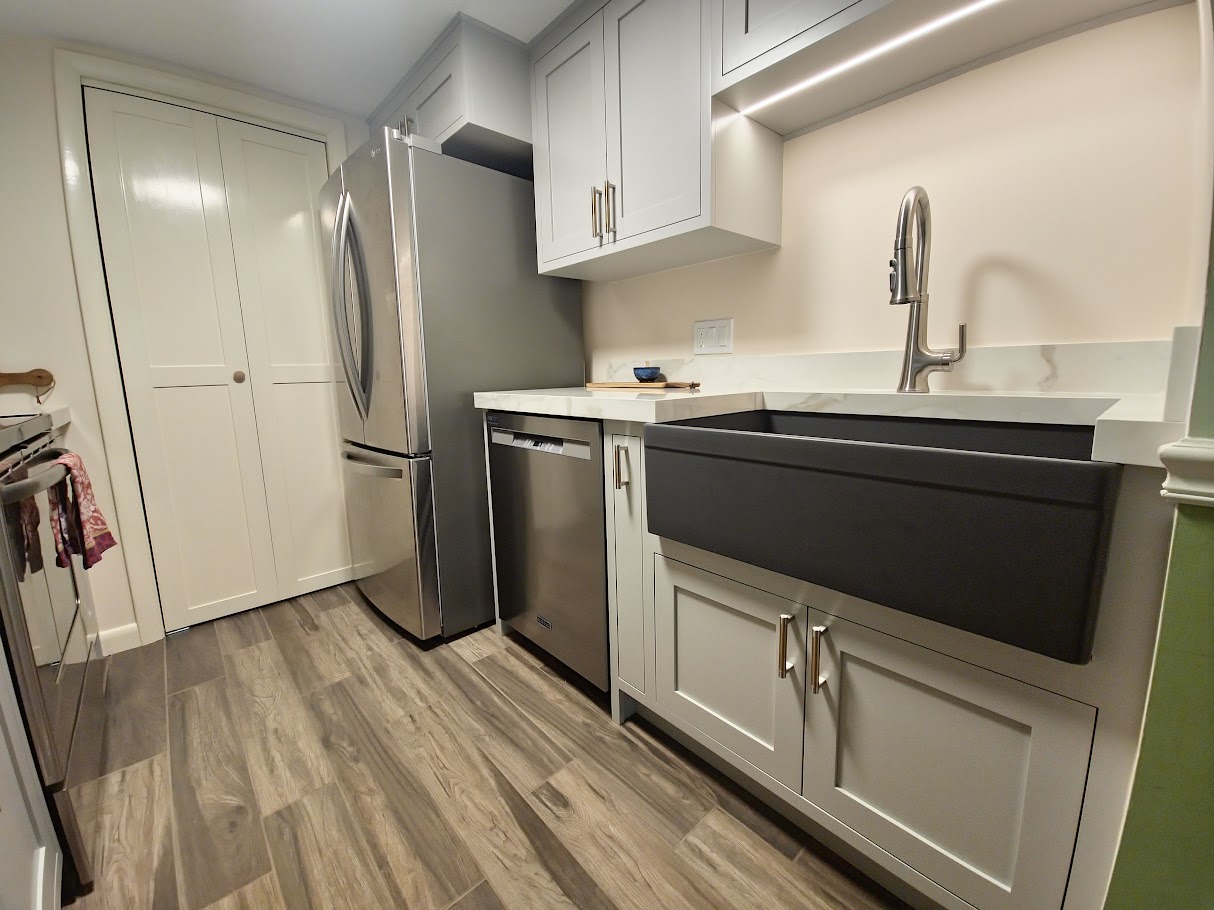
Quick answer: The right contractor for a remodel depends less on price and more on who will actually be present for the decisions that come up mid-project. General contractors excel at coordinating large, multi-trade jobs. Handymen are well suited to small, single-day repairs. Carpenter-led companies sit in between: hands-on for renovation-scale carpentry work without the overhead of a large subcontractor network.
The Three Common Options, and What Each Is Actually Good At
General contractor. A GC's strength is coordination at scale: running multiple subcontractor crews (framers, electricians, plumbers, HVAC, drywall, painters) across a complex schedule, often on larger additions or whole-house projects where many trades need to overlap. The tradeoff is that the GC themselves may not be on site doing the core carpentry, so quality on any given day depends on whichever crew showed up.
Handyman. Best suited to small, discrete repairs and quick fixes, such as fixing a door, patching drywall, or replacing a fixture, usually completed in a day or less. Most handymen aren't licensed contractors and aren't set up for anything requiring permits, structural work, or multi-week scheduling.
Carpenter-led remodeling company. Sits between the two: sized and structured for renovation-scale work (kitchens, bathrooms, additions, ADUs, historic restoration) where the core carpentry (framing, built-ins, trim, finish work) is done by the same person who scoped the project, with licensed specialty trades (electrical, plumbing) still subcontracted as needed.
Questions Worth Asking Any Contractor Before You Hire
Regardless of which type of contractor you're considering, a few questions tend to reveal how a project will actually go:
Who will physically be on site doing the work? Get a specific answer, not a general reassurance. If it's not going to be the person you're talking to, ask who it will be and how much experience they have.
How many other projects will be running at the same time as mine? A contractor juggling too many jobs at once is more likely to have gaps in attention exactly when a decision needs to be made quickly.
How do you handle something unexpected once the walls are open? Every renovation, especially in an older home, uncovers at least one surprise. The answer tells you whether decisions get made on site by someone who understands your project, or escalated through a chain of people.
Can I see licensing and insurance, and can I talk to a recent local reference? A reputable contractor in Rhode Island should have both readily available, along with references from projects similar in scope to yours.
Matching the Contractor Type to Your Project
A small single-trade repair rarely needs a full remodeling company. A licensed handyman is often the faster, more cost-effective choice. A large multi-trade addition with several crews working in parallel is often where a traditional GC's coordination skills matter most. For everything in between, such as a kitchen or bathroom remodel, a historic restoration, an ADU, or custom built-ins, a carpenter-led approach offers hands-on continuity without the overhead of a large subcontractor network.
Frequently Asked Questions
Is a carpenter-led company a good fit for a historic home?
Often, yes. Historic work tends to surface judgment calls, like matching an original profile or working around settled or non-standard framing, that benefit from continuity: the same experienced person making the call throughout, rather than relaying decisions through layers of subcontractors.
What should I look for specifically in Rhode Island?
Beyond general licensing and insurance, ask whether the contractor has direct experience with your town's permitting process and, if you're in a historic district, with your local historic district commission's Certificate of Appropriateness process. That local familiarity can meaningfully shorten how long approvals take.
Does a lower quote always mean a better deal?
Not necessarily. A lower number can reflect a leaner, more efficient operation, or it can reflect costs that get added back in once the project is underway. Ask each contractor to walk through what's included and what typically isn't, so you're comparing like-for-like scope.
If you're comparing your options for an upcoming remodel, historic restoration, or ADU project in Rhode Island, Toensing Construction offers a free, no-pressure on-site consultation. We are happy to talk through whether a carpenter-led approach is the right fit for what you're planning, even if the answer is that it isn't. Request an estimate.